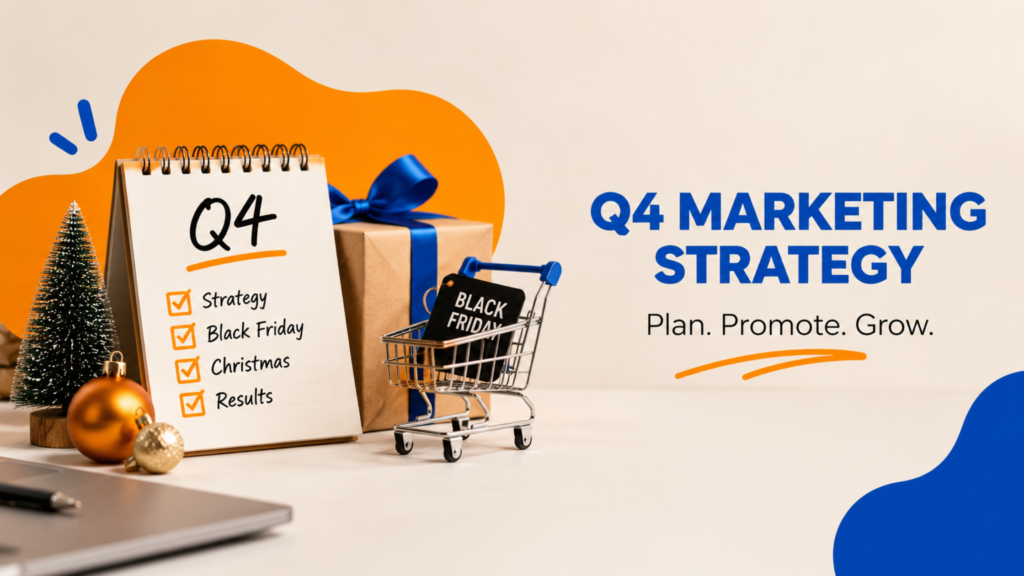
A strong Q4 marketing strategy can make a major difference during one of the busiest and most competitive periods of the year. With Black Friday, Cyber Monday, Christmas shopping and end-of-year promotions approaching, now is the time for businesses to start planning their seasonal marketing campaigns.
But successful Q4 marketing rarely starts in Q4.
If you wait until November to think about your Black Friday campaign or until December to plan your Christmas promotion, you may already be behind. Strong seasonal campaigns require strategy, creative preparation, advertising setup and enough time to build awareness before customers are ready to buy.
So, when is the ideal time to start planning your Black Friday and Christmas marketing?
Table Of Contents
Why Q4 Marketing Requires Early Planning
During most of the year, businesses compete for customers’ attention. During Q4, that competition becomes significantly more intense.
Consumers are surrounded by promotional emails, social media ads, discount codes, gift guides and limited-time offers. At the same time, more businesses increase their advertising activity, making it harder to stand out.
Starting early gives your business time to think beyond simply offering a discount.
You can decide what you want to promote, prepare strong creative assets, optimise your website, build advertising audiences and create a coordinated campaign across multiple channels.
Instead of asking, “What should we post for Black Friday?” a few days before the event, you can build a campaign that supports your wider business goals.
September: Start Planning Your Q4 Strategy
September is an excellent time to begin preparing for the busiest shopping period of the year.
You do not necessarily need to start promoting Christmas products or Black Friday discounts yet. Instead, use this period to build your strategy.
Consider questions such as:
- Which products or services will you promote?
- Will you offer discounts, bundles, gifts or another incentive?
- Which products have the highest margins?
- Who is your target audience?
- Which marketing channels performed best during previous campaigns?
- What budget will you allocate to Q4 advertising?
- What content and creative assets will you need?
- Are there any changes needed on your website or landing pages?
Looking at data from previous campaigns can also help you understand what worked and where there is room for improvement.
For businesses that have never run a Black Friday or Christmas campaign before, this is also the right time to establish clear objectives and KPIs.
October: Build the Campaign
By October, your strategy should start becoming a real campaign.
This is the time to prepare your visuals, videos, advertising copy, email campaigns, landing pages and social media content.
Your website should also be part of the preparation.
A great advertising campaign will not deliver its full potential if customers arrive on a slow, confusing or poorly optimised website. Check important product and service pages, mobile usability, website speed, calls to action and the checkout or enquiry process.
October is also a good time to ensure your tracking is working correctly. Whether you use Google Analytics, advertising pixels or other analytics tools, you want reliable data once your campaigns begin.
And remember: Black Friday does not have to start on Black Friday.
Many brands now introduce offers earlier, run Black Friday Week campaigns or provide early access to subscribers and existing customers.
November: Black Friday Takes Centre Stage
By the beginning of November, most of the major preparation should already be complete.
At this point, your focus can shift towards campaign execution, optimisation and remarketing.
Instead of introducing your business to completely new audiences at the last minute, you can reconnect with people who have already visited your website, interacted with your social media, watched your videos or subscribed to your emails.
This is one reason why starting early matters.
Building awareness before the promotional period means that when your Black Friday offer arrives, potential customers may already know your brand.
Black Friday can also be used for more than immediate sales. It can help businesses acquire new customers, grow email lists and introduce audiences to products or services that may generate repeat purchases later.
Don’t Forget About Cyber Monday
For online businesses in particular, Cyber Monday can extend the Black Friday opportunity.
Rather than treating Black Friday as one isolated day, think about the entire promotional period. Your campaign might include early access, Black Friday weekend offers, Cyber Monday promotions and follow-up communication.
However, avoid running discounts simply because everyone else is doing it.
The offer should make sense financially and strategically for your business. Sometimes a bundle, free gift, free delivery or value-added package can be more appropriate than a large percentage discount.
When Should You Start Planning Christmas Marketing?
Christmas marketing should ideally be planned alongside your Black Friday strategy rather than after it.
Waiting until Black Friday is over to start thinking about Christmas leaves very little preparation time.
By September and October, businesses should already be considering Christmas campaigns, including gift-focused messaging, seasonal content, advertising concepts and special offers.
This allows you to transition naturally from Black Friday into the Christmas shopping period.
For example, a customer who discovers your brand during Black Friday could later see a Christmas gift campaign through remarketing.
Your Q4 marketing should therefore feel like one connected strategy rather than several unrelated promotions.
November and December: Shift From Discounts to Gift Buying
Once Black Friday and Cyber Monday are over, customer motivations begin to change.
The focus moves from finding the biggest discounts towards finding the right Christmas gifts.
Your messaging should change accordingly.
Instead of focusing primarily on savings, your content can highlight gift ideas, convenience, product benefits, delivery deadlines, gift cards and solutions for customers who are unsure what to buy.
Creating gift guides can be particularly useful. These could include categories such as:
Gifts under €50
Gifts for him
Gifts for her
Last-minute Christmas gifts
Gifts for clients or employees
The easier you make it for customers to choose, the easier you make it for them to buy.
Create a Q4 Marketing Timeline
A simple Q4 marketing timeline could look like this:
September: Strategy, campaign ideas, budgeting and audience planning.
October: Create content, advertising assets, landing pages and email campaigns. Test your website and tracking.
Early November: Begin awareness campaigns and introduce early Black Friday communication.
Black Friday & Cyber Monday: Run promotional campaigns, remarketing and email communication while monitoring performance.
Early December: Transition towards Christmas shopping and gift-focused campaigns.
Mid to Late December: Focus on delivery deadlines, gift cards, digital products and last-minute purchases where relevant.
After Christmas: Consider post-Christmas, New Year or January campaigns.
Planning this timeline in advance makes it easier to maintain consistent communication without creating everything at the last minute.
What Channels Should You Include?
A strong seasonal campaign rarely depends on a single marketing channel.
Depending on your business, your Q4 strategy could combine Google Ads, social media advertising, organic social content, email marketing, SEO, remarketing and dedicated landing pages.
Each channel can support a different stage of the customer journey.
Social media can introduce the campaign. Google Ads can capture people actively searching for products or services. Email marketing can reconnect with existing customers. Remarketing can remind visitors who considered purchasing but did not convert.
When these channels work together, your campaign becomes much stronger than a series of isolated promotional posts.
Don’t Wait Until Black Friday to Think About Black Friday
One of the biggest mistakes businesses can make is treating seasonal marketing as something that begins when the promotion begins.
By that point, much of the important work should already be finished.
September and October give you valuable time to understand your audience, develop your offer, prepare creative assets, optimise your website and build awareness.
Then, when Black Friday and the Christmas shopping season arrive, your business is ready to focus on performance rather than preparation.
Start Preparing Your Q4 Marketing Now
Q4 can be one of the biggest opportunities of the year, but strong results require more than a last-minute discount and a few social media posts.
A successful seasonal campaign combines the right strategy, creative content, advertising, website experience and timing.
At Crystal Web Solutions, we help businesses prepare and execute digital marketing strategies across web development, SEO, Google Ads, social media and online advertising.
If you want your Black Friday and Christmas campaigns to be ready before the Q4 rush begins, now is the time to start planning.