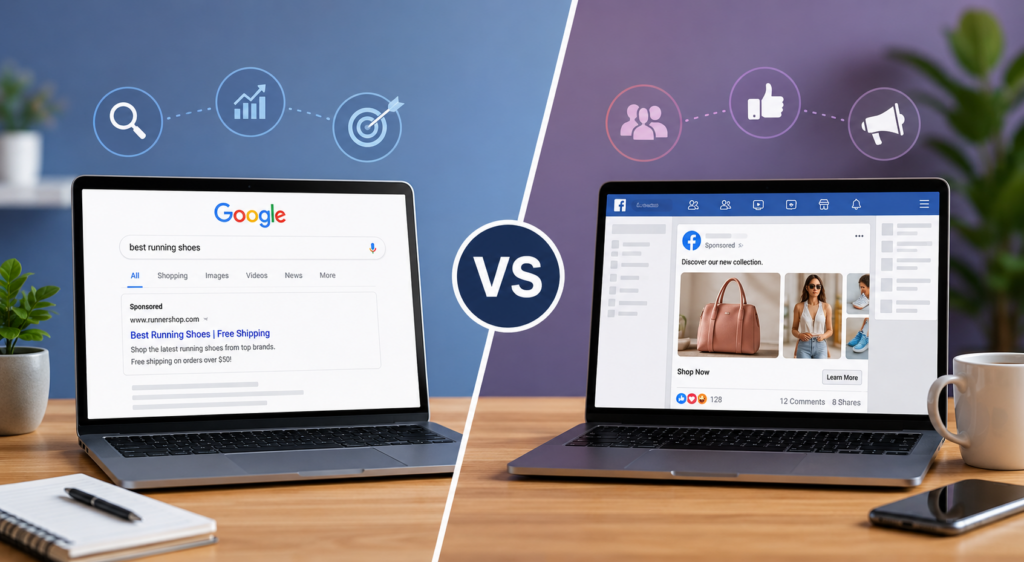
Google Ads vs Facebook Ads is one of the most common questions small business owners face when planning their digital marketing strategy. Both platforms offer unique advantages, but choosing the right one depends on your goals, target audience, budget, and the type of products or services you offer.
Table Of Contents
Understanding the Main Difference: Intent vs Interruption
The biggest difference between Google Ads and Facebook Ads lies in how users interact with each platform.
Google Ads: Capturing Existing Demand
Google Ads targets people who are actively searching for something.
For example, if someone searches for “dentist in Limassol” or “website development services,” they already have a need and are looking for a solution.
This is known as intent-based marketing because users are showing clear purchase intent through their search queries.
Benefits of Google Ads include:
- Reaching people who are ready to take action
- High-quality leads
- Fast results for businesses with clear customer demand
- Strong performance for local services
Facebook Ads: Creating Demand
Facebook and Instagram ads work differently.
Users are scrolling through their feeds to connect with friends, watch videos, or consume content—not necessarily to buy something.
Your advertisement interrupts their browsing experience and introduces them to a product or service they may not have been actively seeking.
This is known as interruption marketing.
Benefits of Facebook Ads include:
- Building brand awareness
- Reaching highly targeted audiences
- Generating interest in new products or services
- Supporting long-term growth and customer engagement
Budget Considerations for Small Businesses
Many small business owners assume one platform is cheaper than the other. The reality is more nuanced.
Google Ads Costs
Google Ads often has higher cost-per-click rates because you are competing for valuable search terms.
For example, keywords related to insurance, legal services, healthcare, or financial products can become expensive due to strong competition.
However, users clicking these ads are often closer to making a purchase, which can lead to higher conversion rates.
Google Ads may be ideal if:
- You offer a service people actively search for
- You need leads quickly
- Your website is optimized for conversions
Facebook Ads Costs
Facebook Ads typically offer lower cost-per-click and cost-per-impression rates.
This makes them attractive for businesses with smaller budgets or those looking to build awareness.
However, users may require multiple interactions with your brand before they become customers.
Facebook Ads may be ideal if:
- You want to increase visibility
- You have strong visual content
- Your product benefits from storytelling and demonstrations
Which Industries Perform Best on Google Ads?
Google Ads tends to perform exceptionally well for businesses offering solutions to specific problems.
Examples include:
- Dentists
- Lawyers
- Insurance companies
- Home repair services
- Plumbers
- Accountants
- Web development agencies
- Real estate services
In these industries, customers often search online when they need help immediately.
Being visible at the moment of search can generate highly qualified leads.
Which Industries Perform Best on Facebook Ads?
Facebook and Instagram often work best for businesses that can create visual interest and emotional engagement.
Examples include:
- Beauty clinics
- Fitness centres
- Restaurants
- Fashion brands
- E-commerce stores
- Travel agencies
- Event organizers
- Interior design businesses
These businesses can use images, videos, testimonials, and creative content to attract attention and build interest.
When Should Small Businesses Use Both Platforms?
Many successful businesses don’t choose one platform—they use both.
Google Ads and Facebook Ads can complement each other throughout the customer journey.
A potential customer might:
- Discover your brand through a Facebook or Instagram ad.
- Visit your website.
- Leave without purchasing.
- Search for your business on Google later.
- Convert after seeing a Google Ad.
Using both platforms creates multiple touchpoints that increase trust and improve conversion rates.
A combined strategy often works best because:
- Facebook builds awareness.
- Google captures demand.
- Remarketing reconnects with interested visitors.
- Customers encounter your brand multiple times before making a decision.
How to Decide Which Platform to Start With
If your budget is limited, start by asking one simple question:
Are people already searching for what I offer?
If the answer is yes, Google Ads may provide faster results.
If the answer is no, Facebook Ads may help create awareness and generate interest.
For many small businesses, the most effective approach is to begin with one platform, measure results carefully, and gradually expand into the second platform as the budget grows.
Final Thoughts
There is no universal winner in the Google Ads vs Facebook Ads debate. The right choice depends on your business goals, industry, audience, and budget.
Google Ads excels at capturing customers who are actively searching for solutions. Facebook Ads excels at introducing your brand to new audiences and building long-term relationships.
When used strategically together, they can create a powerful marketing system that helps small businesses attract more customers, increase conversions, and grow sustainably.
If you’re unsure which platform is right for your business, the team at Crystal Web Solutions can help you develop a digital marketing strategy tailored to your goals, budget, and target audience.