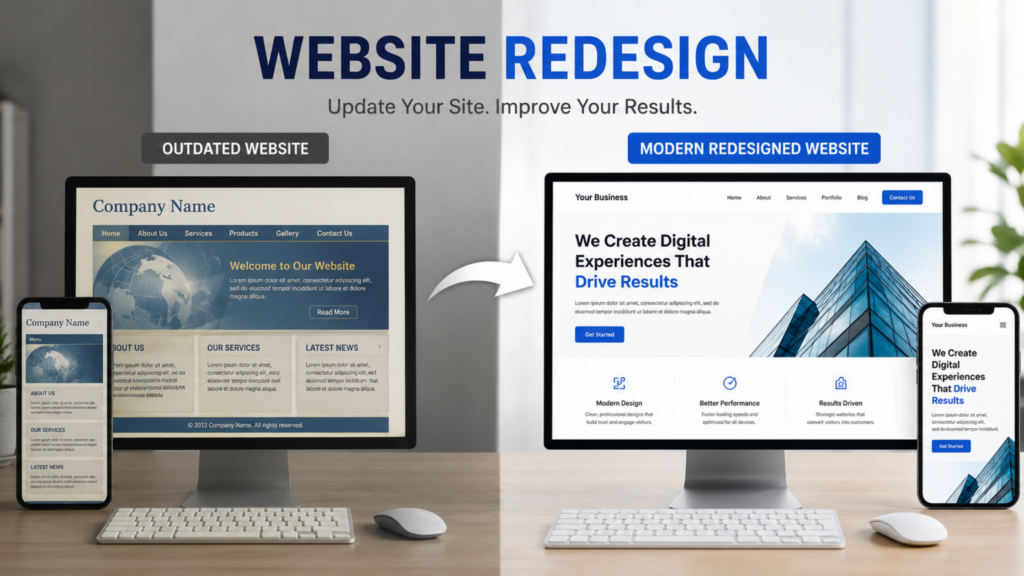
Your website is one of the most valuable digital assets your business has. It represents your brand, helps customers learn about your services, and often plays a key role in generating leads and sales. However, even the best websites don’t last forever. Design trends change, technology evolves, and customer expectations continue to grow.
So, how often should you update your website? While there isn’t a single answer that fits every business, reviewing your website regularly and investing in a website redesign when necessary can help you stay competitive, improve user experience, and support your SEO performance.
Table Of Contents
When Is a Website Redesign Necessary?
A common recommendation is to evaluate your website every two to four years. This doesn’t always mean starting from scratch. In many cases, updating specific pages, improving performance, or modernising the design is enough to keep your website relevant.
The right timing depends on several factors, including your business goals, the technology your website is built on, and how well it performs for both users and search engines. If your website is regularly maintained and updated, you may only need gradual improvements instead of a complete overhaul.
The important thing is to treat your website as an evolving part of your business rather than a one-time project.
Signs Your Website Redesign Is Overdue
Sometimes the need for a redesign is obvious, while other times the warning signs appear gradually. If you recognise several of the points below, it may be time to consider updating your website.
Your Website Looks Outdated
Visitors form an opinion about your business within seconds of landing on your website. If the design feels old-fashioned, cluttered, or inconsistent with your current branding, it can affect your credibility before visitors even read your content.
Modern websites typically feature clean layouts, easy-to-read typography, high-quality imagery, and intuitive navigation. A fresh design helps create trust and encourages visitors to explore further.
Your Site Isn’t Fully Optimised for Mobile Devices
Today, a large percentage of website traffic comes from smartphones and tablets. If users have to zoom in to read text, struggle to click buttons, or experience layout issues on smaller screens, they are likely to leave and visit a competitor instead.
Responsive design is no longer optional. Every page should provide a smooth experience regardless of the device being used.
Your Website Loads Slowly
Website speed has a direct impact on both user satisfaction and search engine rankings. Slow-loading pages often lead to higher bounce rates because visitors simply don’t want to wait.
Performance issues can result from outdated code, oversized images, unnecessary plugins, or older website infrastructure. Updating these technical elements during a redesign can significantly improve loading times and create a better overall experience.
Your Business Has Changed
Businesses rarely stay the same for years. You may have introduced new services, expanded into new markets, refreshed your branding, or changed your target audience.
If your website no longer accurately reflects your business, visitors may receive outdated information or fail to understand what you offer. Keeping your content aligned with your current goals is one of the strongest reasons to invest in a redesign.
Your SEO Performance Has Stagnated
An older website may struggle to compete in search results, even if you regularly publish new content. Search engines now evaluate factors such as page speed, mobile usability, site structure, and user experience when determining rankings.
A modern website redesign provides an opportunity to improve technical SEO by creating cleaner code, better navigation, stronger internal linking, and improved page performance. These changes make it easier for search engines to crawl your website while also improving the experience for your visitors.
Visitors Aren’t Taking Action
Your website should encourage visitors to contact you, request a quote, make a purchase, or complete another valuable action.
If you’re getting traffic but very few enquiries or conversions, the issue may not be your marketing—it could be your website. Poor navigation, unclear calls to action, confusing layouts, or lengthy forms can all discourage users from taking the next step.
A redesign focuses on removing these barriers and creating a clearer customer journey.
How a Website Redesign Improves SEO and Performance
Many business owners think redesigning a website is mainly about aesthetics, but the benefits go far beyond appearance.
A modern website is built with current SEO best practices in mind. Faster loading speeds, mobile responsiveness, logical site architecture, accessible navigation, and properly structured content all contribute to stronger search performance.
Improving these technical foundations also benefits your users. Visitors can find information more easily, pages load faster, and the overall browsing experience becomes smoother. Search engines reward websites that provide this positive experience, making SEO and user experience closely connected.
Performance improvements are equally important. Optimised images, streamlined code, modern hosting solutions, and efficient caching all help your website respond more quickly. Even small improvements in loading speed can have a noticeable effect on engagement and conversion rates.
Should Every Business Completely Redesign Their Website?
Not always.
Sometimes a full redesign is the best solution, particularly if your website is several years old or built on outdated technology. In other situations, targeted improvements may deliver excellent results without rebuilding everything from the ground up.
For example, updating your homepage, improving navigation, refreshing branding, or optimising page speed may be enough to extend the life of your website while providing a better experience for visitors.
A professional website audit can help identify which improvements will have the biggest impact and whether a complete redesign is truly necessary.
Keep Improving Instead of Waiting Too Long
One of the biggest mistakes businesses make is treating their website as a finished project. Successful websites evolve alongside the business they represent.
Regularly reviewing your content, checking performance, monitoring SEO, and making incremental improvements can prevent your website from becoming outdated. Instead of waiting five or six years before making any changes, continuous optimisation helps maintain a strong online presence and reduces the need for major rebuilds in the future.
Final Thoughts
There isn’t a fixed schedule for every business, but reviewing your website every two to four years is a smart starting point. More importantly, pay attention to how your website performs. If it no longer reflects your brand, struggles to rank in search results, loads slowly, or isn’t converting visitors into customers, it may be time to consider a website redesign.
At Crystal Web Solutions, we believe your website should be more than just visually appealing—it should support your business goals, perform well in search engines, and provide an outstanding experience for every visitor. Whether you need a complete website redesign or strategic improvements to your existing site, our team is here to help you build a website that delivers long-term results.